Forest reclamation
Strengthening forest health and supporting rural land stewardship through locally rooted reclamation, mitigation and resiliency work.
Serving Northern California · 501(c)3 Nonprofit · CSLB #1125441
Coming soon
Building stronger forests, stronger communities, and new rural opportunity.
El Dorado County
Non-Profit Construction Corporation is developing the Rural Centers Wildland and Urban Interface Residential Forest Reclamation Program, a new initiative created specifically around the needs and opportunities of El Dorado County's rural centers and Wildland-Urban Interface (WUI) communities.
Advancing Section 3.2 of NPCC's mission, the program will support disaster recovery, rebuilding, mitigation, and long-term community resiliency regardless of federal disaster designation.
Program overview
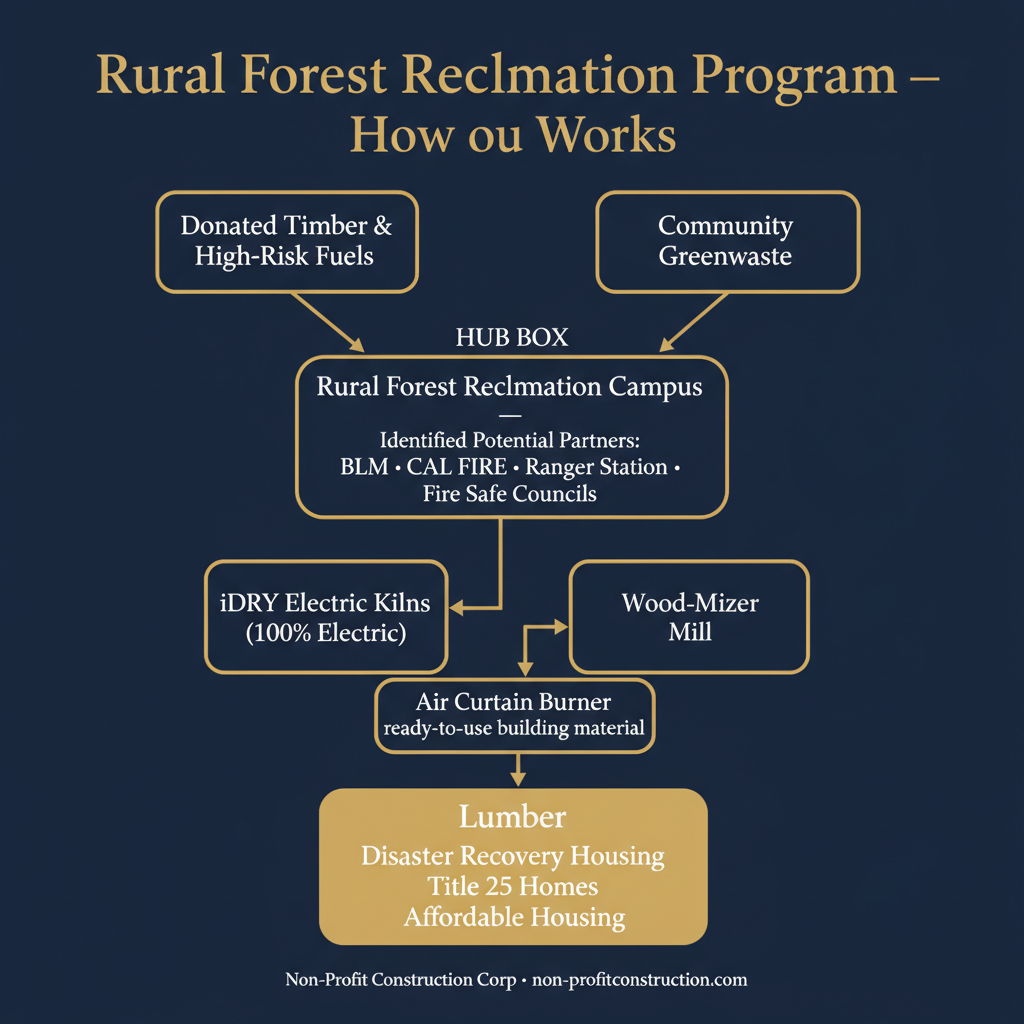
From donated timber and community greenwaste to disaster recovery lumber — a full-circle approach to forest health and housing.
Program focus
Strengthening forest health and supporting rural land stewardship through locally rooted reclamation, mitigation and resiliency work.
Supporting recovery, rebuilding, mitigation, and long-term preparedness in WUI communities.
Creating meaningful local jobs, workforce pathways, and new economic activity in lower-income rural communities.
A message from our board president
Caleb Armstrong, Board President

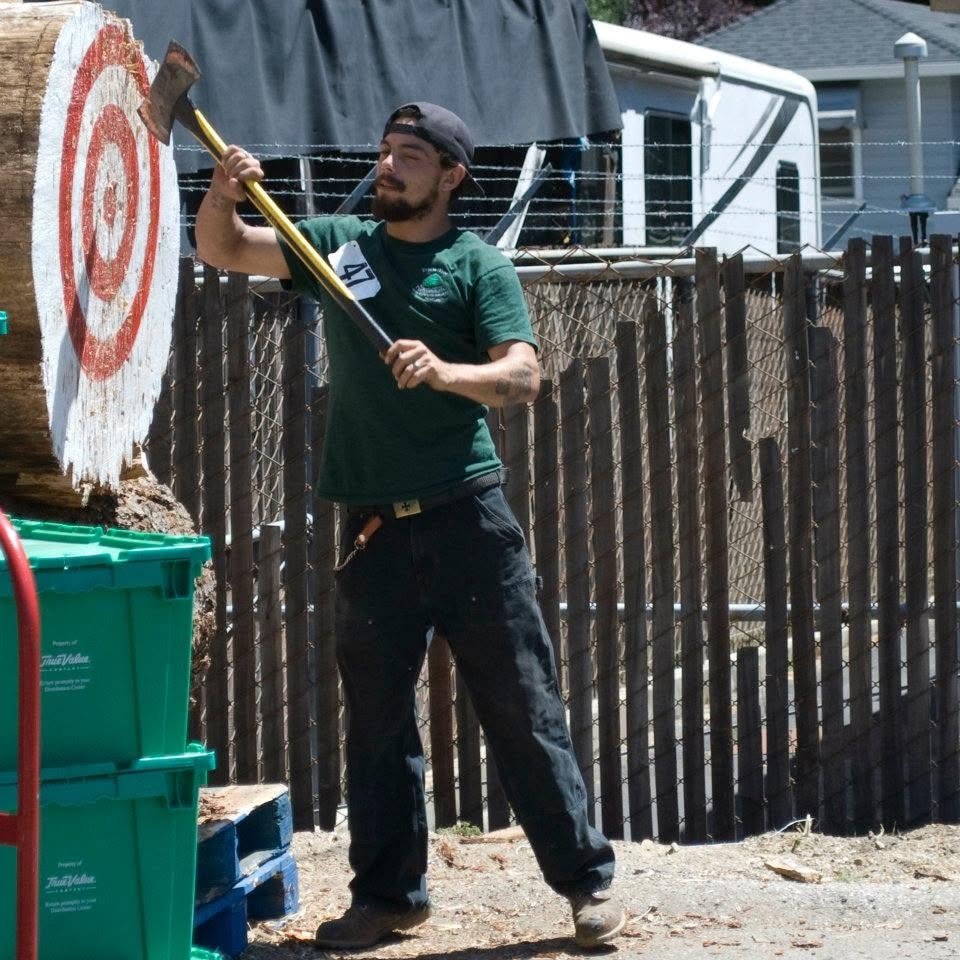
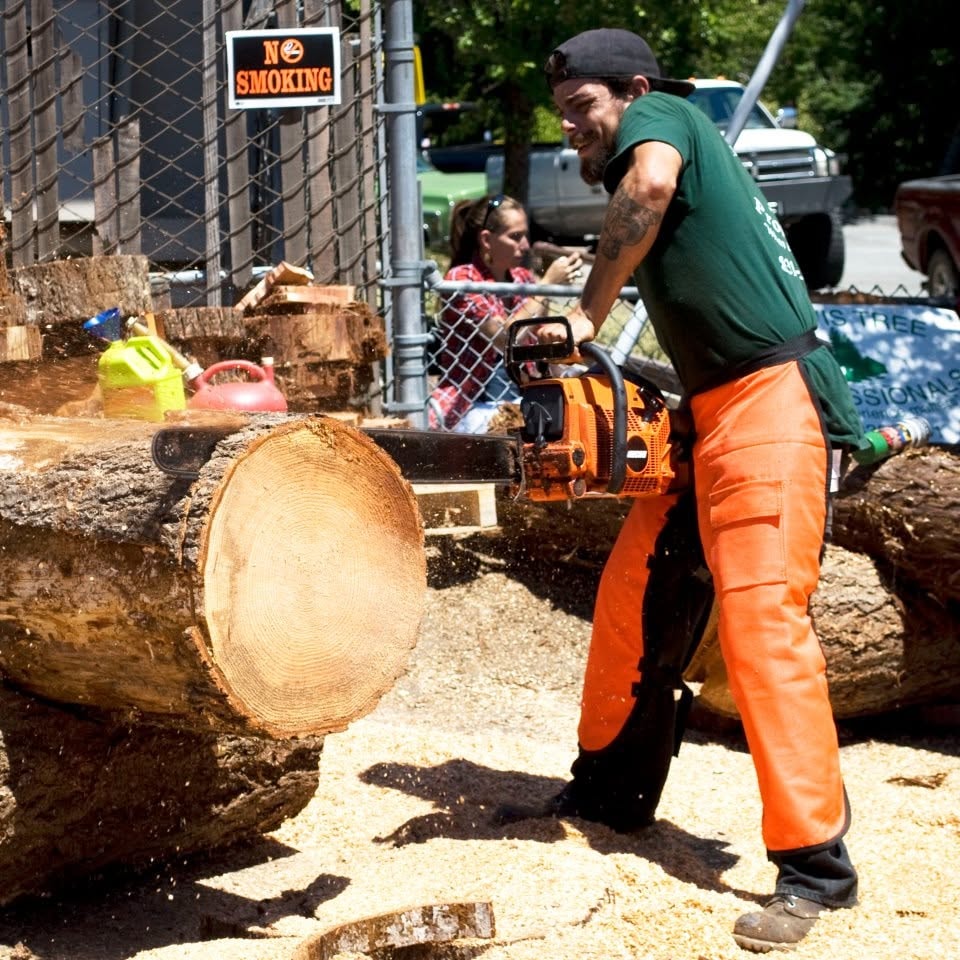
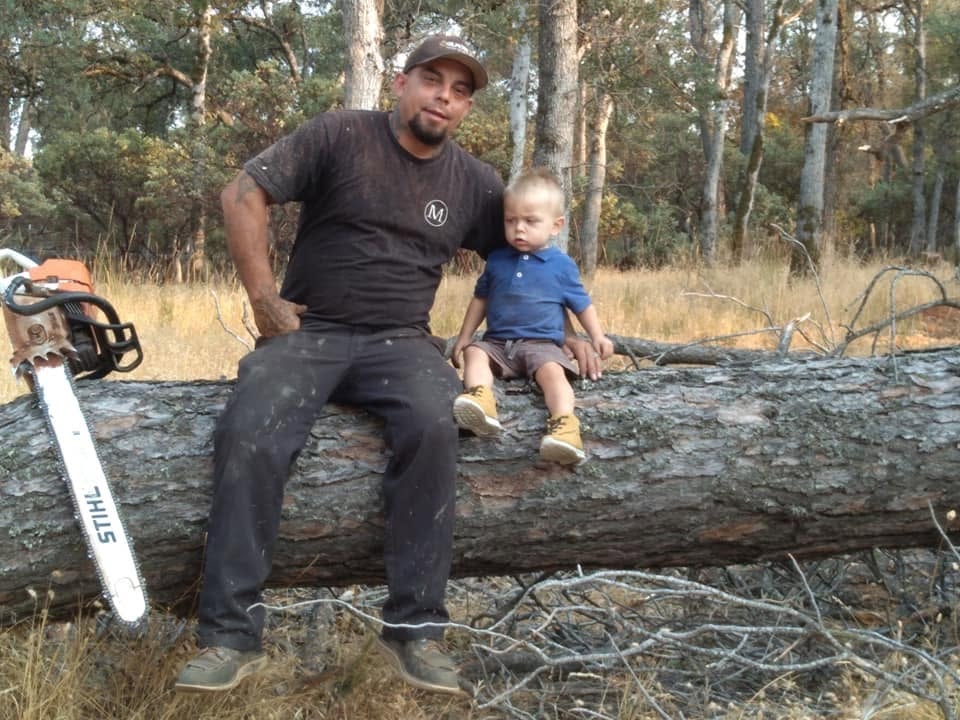
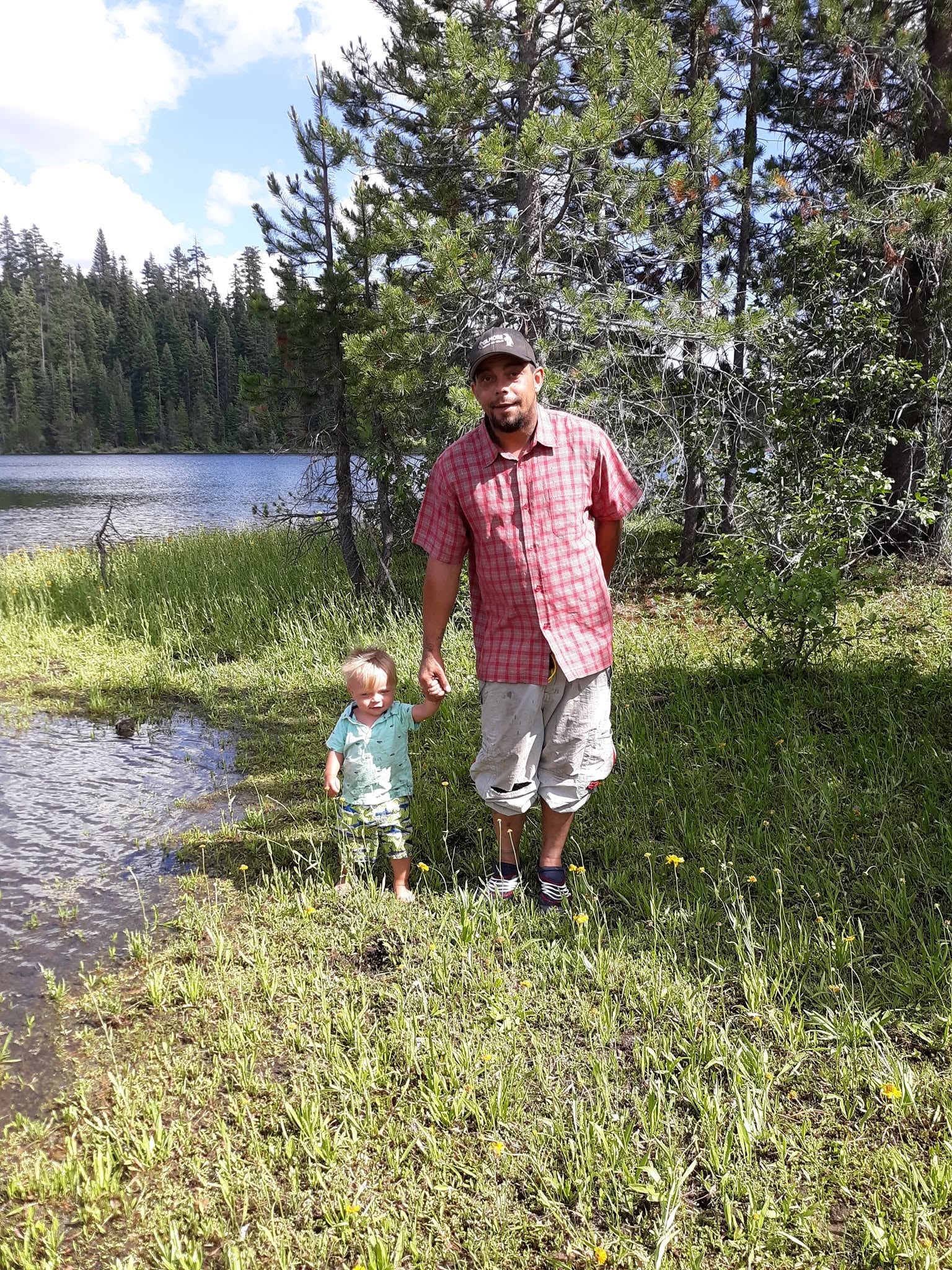
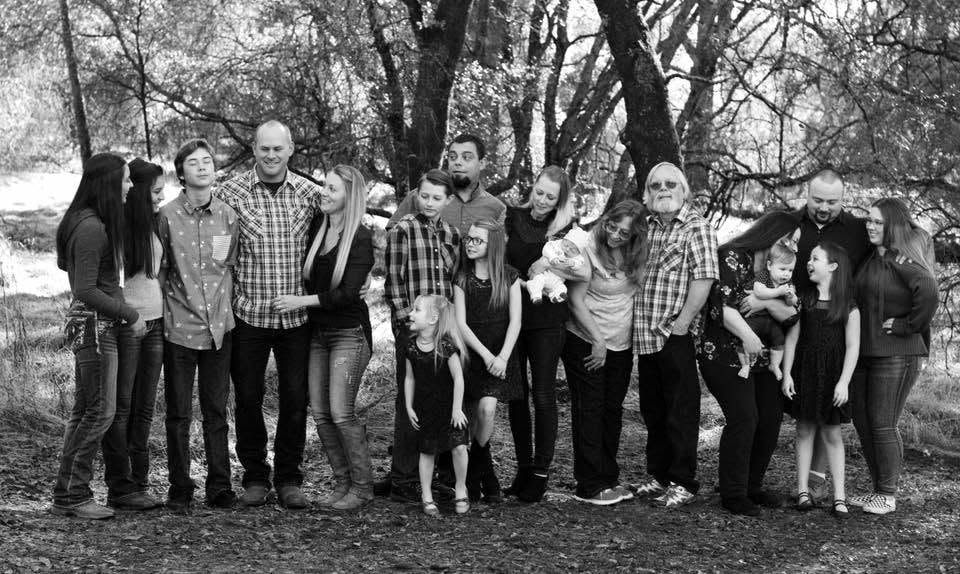
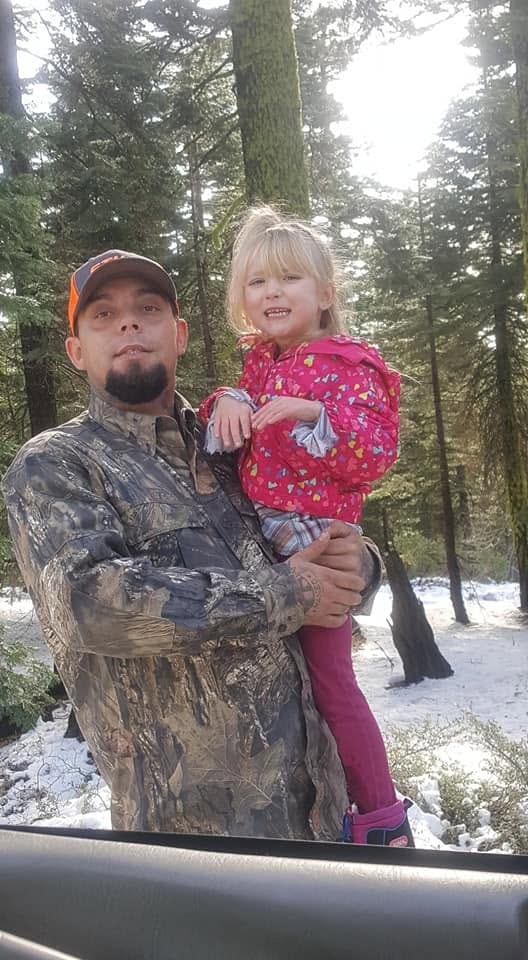
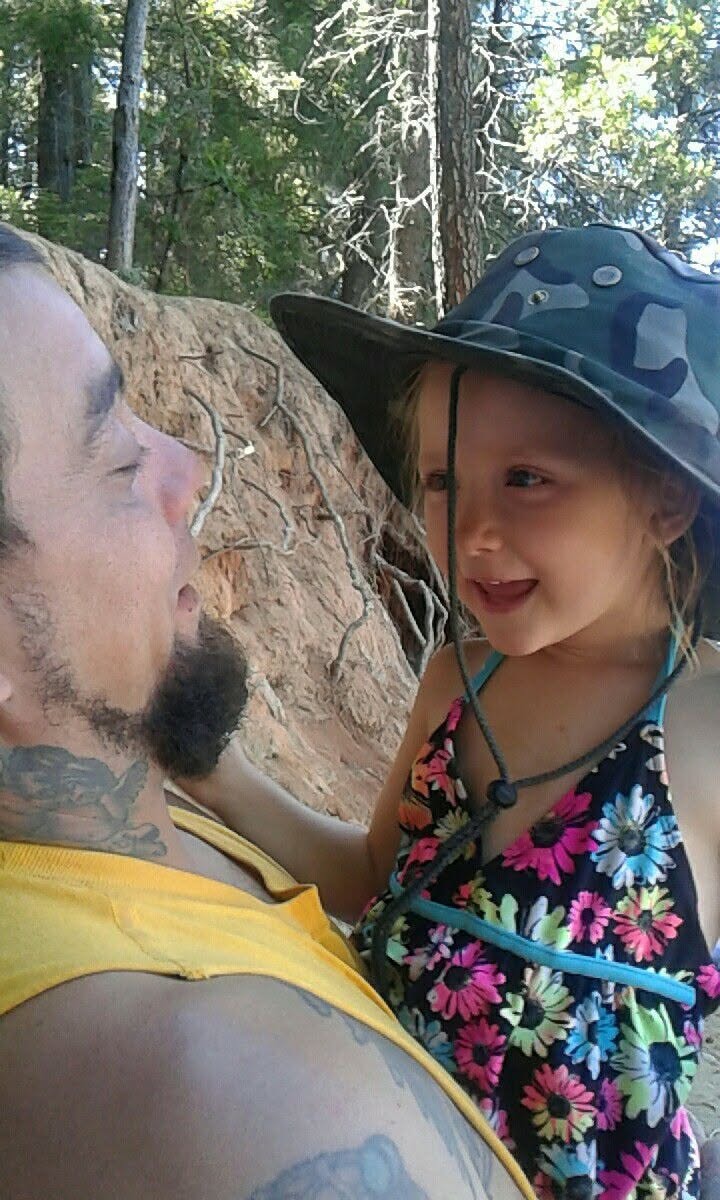
My family and I spend so much of our valued time in our forests. From living, camping, swimming, fishing, and working, our community is so blessed to have the connection with nature we do and the distance from urban centers we truly value. But I have also seen the very real and traumatizing effects of wildfires in our communities, from the Caldor Fire and Mosquito Fire to the September lightning strikes and even more recent fires this year.
We are dedicated to many missions, but disaster recovery, mitigation, and resiliency are so much at the heart of what we do for many reasons. As a Georgetown Divide native, I truly value our friends, families, schools, jobs, homes, parks, and community.
We have many thousands of acres that are unmanaged and back up not only to our recreational forest, but to our neighbors and schools where our children attend. We have seen the devastation of wildfires in our Northern California communities firsthand. For our communities to be sitting in the middle of our forests without the needed resources or economic tools we once had—now monopolized by corporate logging—we have very low resources to mitigate the risks to our communities.
I truly hope there is common understanding that our fuels are out of hand and need a resource to manage these critical risks and provide viable economic resources. As much of our lands are at the border of federal lands, we are exploring public, private, federal, and state partnerships. I hope landowners and homeowners will work with us in our new programs and build cooperative agreements to bring our vital forest economy back to our community.
When valuable timber can be responsibly managed in our communities to create vital jobs, we can protect our homes and towns, steward forestry lands, and safeguard the beautiful federal and state lands we take so much pride in. Working with ranger districts and forestry partners, NPCC can pursue grants that help reduce wildfire risk, manage fuels, thin forests, and bring back local rural jobs—putting community safety and local benefit before profit-driven extraction.
If you are a significant timberland owner, please reach out so we can share information about our upcoming goals and programs. We hope to reclaim jobs and economic opportunity, thin forests for the safety of our communities, and build stability for high-risk wildfire areas in our Northern California communities. Preventing wildfires is one of the most important ways we can provide safety and stability for our community.
For eligible gifts, donors may be able to claim a charitable income-tax deduction based on the fair market value of the timber or forestry asset contributed, subject to applicable tax rules, valuation requirements, and individual circumstances. Donors should consult qualified legal and tax professionals to determine whether a gift is the right pathway while supporting community safety and the rural economy.
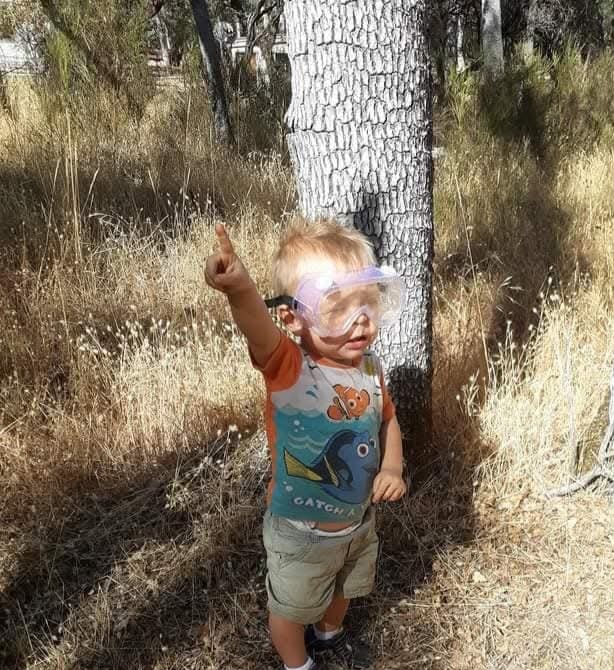
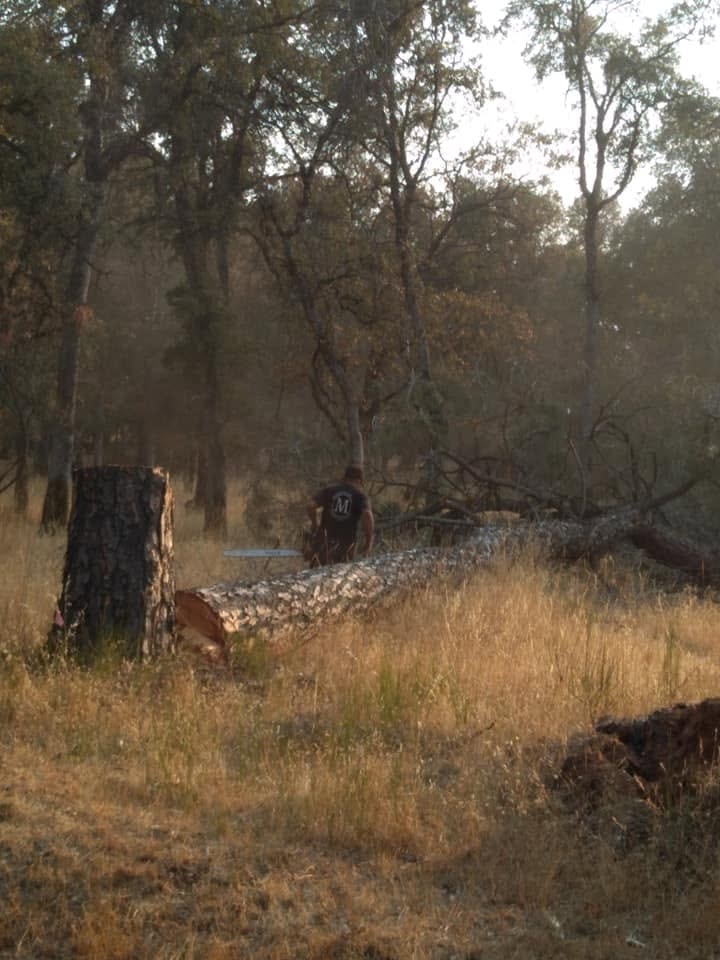
Caleb Armstrong walks toward a freshly felled tree during hands-on forest-management work—an everyday reminder that fuels reduction and responsible stewardship require local knowledge, care, and action.
Caleb Armstrong, Board President and Chief Executive Officer
Give to the program
Landowners with standing timber or Timber Preserve Zoned (TPZ) land can make a meaningful charitable contribution to NPCC — and help close a full circle of community benefit.
Our reclamation programs hope to accept and remove large timber from residential properties that homeowners can donate to NPCC. Removing hazardous trees and overgrown fuels from homes in WUI communities directly reduces wildfire risk while putting those forest resources to work for the people who need them most.
We are actively working toward developing our Rural Forest Reclamation Campus and processing facility, and are currently seeking funding and identifying partners to make it a reality. Prospective partners include our local ranger station, the Bureau of Land Management, CAL FIRE, and others who share our commitment to forest health and rural community resilience. The campus is planned to feature a greenwaste disposal site open to the public at very low cost, a high-efficiency air curtain burner that generates electricity for our mills while reducing carbon and CO₂ emissions and producing biochar — a diversified product that helps restore soil health. Our 100% electric kilns, provided by iDRY Air Kilns, will work alongside our Wood-Mizer mill to process and store high-risk fuels as readily available lumber for our disaster recovery and affordable housing programs.
For eligible gifts, donors may be able to claim a charitable income-tax deduction based on the fair market value of the timber or forestry asset contributed, subject to applicable tax rules, valuation requirements, and individual circumstances. Donors should consult qualified legal and tax professionals to determine whether a gift is the right pathway for their situation.
Our track record
NPCC built and raised all the funding for the first Title 25 Limited Density Owner-Built Rural Dwelling completed in El Dorado County — a landmark achievement for disaster recovery housing in the Sierra Nevada foothills. California's Title 25 Limited Density Owner-Builder program is a distinct rural housing provision that allows owner-builders in low-density areas to construct a primary residence under a simplified code pathway. Navigating this program for the first time in El Dorado County required NPCC to work directly with county building officials, raise private and charitable funding, and coordinate every phase of construction on behalf of a Caldor Fire survivor family.
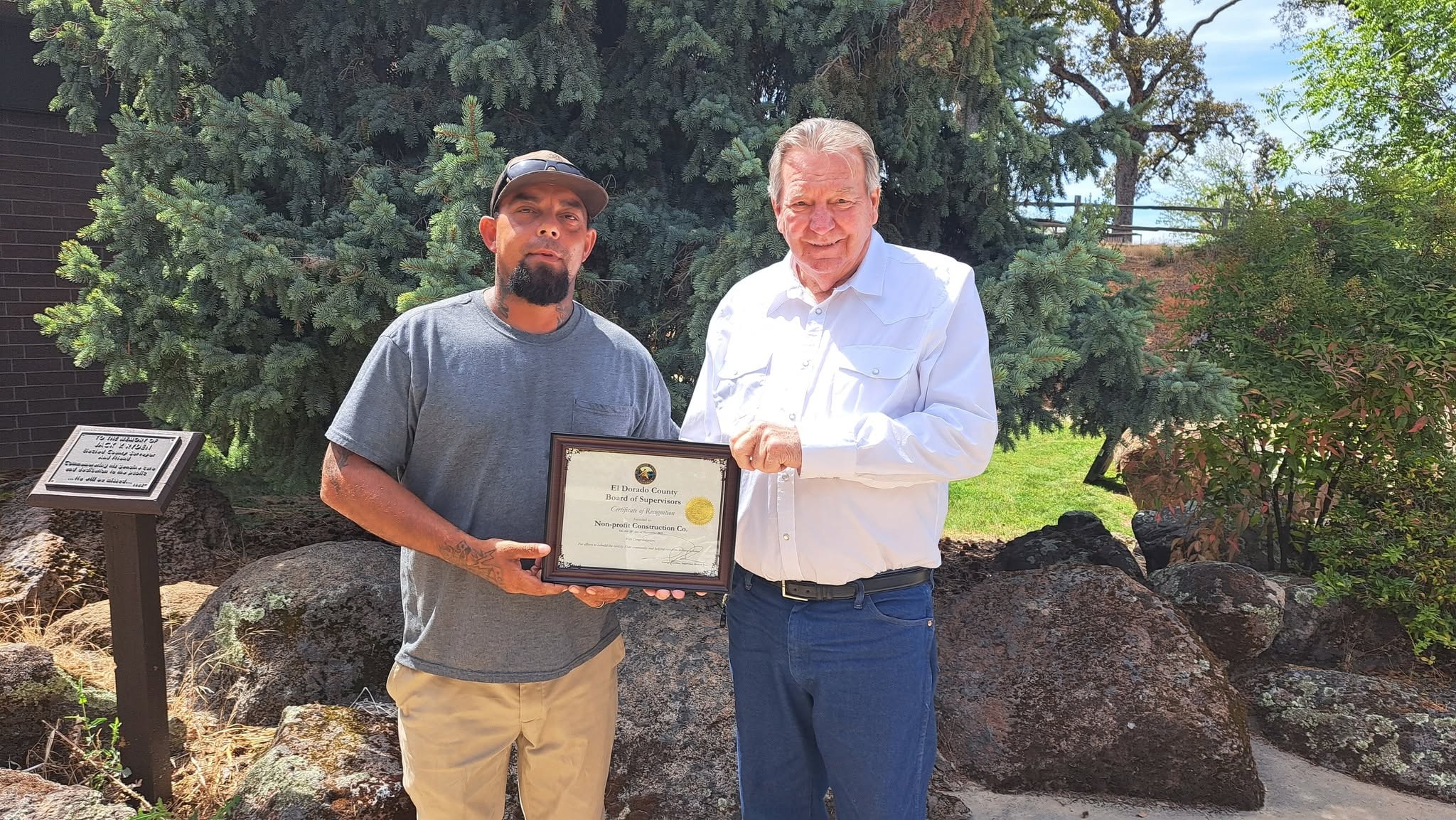
Grizzly Flats — a tight-knit mountain community in El Dorado County — was nearly destroyed by the Caldor Fire in August 2021. NPCC's commitment to rebuilding there, including completing this first-of-its-kind Title 25 owner-builder home, reflects the organization's deep roots in El Dorado County and its mission to deliver real housing outcomes for disaster survivors regardless of federal disaster designation. District 2 Supervisor George Turnboo presented NPCC with a Certificate of Recognition from the El Dorado County Board of Supervisors in acknowledgment of this work. Both Supervisor Turnboo and NPCC President and CEO Caleb Armstrong bring personal backgrounds in the timber and logging industry — a shared foundation that informs their approach to rural recovery, forest stewardship, and community resilience in El Dorado County.
Tax deductibility is subject to IRS rules, qualified appraisal requirements, and individual circumstances. NPCC recommends consulting a qualified legal and tax professional before making a gift of real property or timber assets.
Coming soon
A new approach to rural resilience and economic opportunity is coming to El Dorado County.
Learn more about NPCC